Why Winter Is the Ideal Time for Sunshine Coast Roof Washes
Ask most Sunshine Coast homeowners when they think about cleaning their roof, and the answer is usually spring or "when it starts looking bad." But winter, roughly June to August in Queensland, is often the best window for a professional roof wash. The weather is drier and milder, the days are clear, and the grime that built up over a humid summer is ready to be dealt with before it causes lasting damage. This guide explains why the cooler months suit roof washing so well, what to expect from the process, and how to get the most from it in 2026.
Understanding the Sunshine Coast's Roof Grime Problem
The Sunshine Coast's subtropical climate is great for beach days and tough on roofs. Warm temperatures, high humidity, coastal salt in the air, and regular summer rainfall create ideal conditions for biological growth. Most roofs in the region deal with a combination of the following:
- Algae and black streaking: Those dark streaks running down tiles and metal sheeting are typically colonies of cyanobacteria, which thrive in damp, humid conditions.
- Moss and lichen: These grow in shaded areas, particularly on south-facing roof sections and beneath overhanging trees. They hold moisture against the surface and can lift tile edges over time.
- Mould and mildew: Common on roofs with poor airflow or heavy shade.
- Salt deposits: Homes near the coast, from Mooloolaba to Peregian and Coolum, collect salt that can accelerate corrosion on metal roofing and fixings.
- Debris and pollen: Leaves, bark, and fine organic matter accumulate in valleys and gutters, creating a layer where growth takes hold.
Left alone, these contaminants do more than make a house look tired. They can degrade tile glazing, break down roof coatings, and contribute to blocked gutters and drainage problems.
The Main Reasons Winter Works So Well
1. Drier, More Stable Weather
The Sunshine Coast's winter is its dry season. Rainfall drops significantly compared to the summer and early autumn wet months, so there is a much better chance of finding several consecutive dry days. That matters because a roof wash is best done in settled weather. Cleaning solutions need time to work on the surface, and a dry spell afterwards lets the roof dry out evenly and lets treatments perform as intended.
2. Cooler Temperatures Are Safer and More Effective
Summer roofs get extremely hot. Tiles and metal sheeting can reach surface temperatures well beyond what is comfortable or safe to work on. In winter, surfaces are cooler, which brings several benefits:
- Safer working conditions for technicians, with less risk of heat stress and slippery, sweaty footing
- Cleaning solutions that stay on the surface longer instead of evaporating too quickly in the sun
- More even results, with fewer streaks or patchy drying
- More comfortable conditions for homeowners who want to inspect the work afterwards
3. Lower Humidity Helps Roofs Dry
After washing, a roof needs to dry properly. Winter's lower humidity and crisp, sunny days help tiles and sheeting dry thoroughly. This is especially useful if your roof is then painted, sealed, or coated, since coatings need clean, dry surfaces to bond properly.
4. Preparing Before the Next Wet Season
Algae and moss are at their most active when warm, wet conditions return. Cleaning and treating your roof in winter means it enters spring and summer clean, with growth inhibitors already in place. Many roof washing treatments leave residual protection that slows regrowth, so timing the clean before the humid months gives you the longest benefit from that protection.
5. Easier Scheduling and Better Availability
Many homeowners put off exterior maintenance until spring, when demand for outdoor services climbs. Booking in winter often means more flexible appointment times and shorter waits. Since good weather days are more reliable, jobs are also less likely to be postponed.
Roof Washing and Roof Longevity
A roof is one of the most expensive parts of a home to repair or replace, so routine maintenance pays off. Regular cleaning can help in several ways:
- Protecting tile surfaces: Removing moss and algae stops moisture being held against concrete or terracotta tiles, which can contribute to surface deterioration.
- Reducing corrosion risk: Washing off salt and organic matter helps protect metal roofing, especially in coastal suburbs.
- Keeping gutters flowing: Cleaning debris from valleys and gutters reduces overflow and water backing up under tiles or flashing.
- Revealing problems early: A clean roof makes it much easier to spot cracked tiles, loose ridge capping, damaged pointing, or worn flashing before they turn into leaks.
Cooling and Energy Benefits
Dark, dirty roofs absorb more heat. While a roof wash won't replace insulation or proper ventilation, removing heavy algae staining can modestly improve how much sunlight the surface reflects. On a coast where air conditioning use climbs in summer, a clean roof is a small contributor to a cooler home. It is a bonus rather than the primary reason to wash, but worth noting.
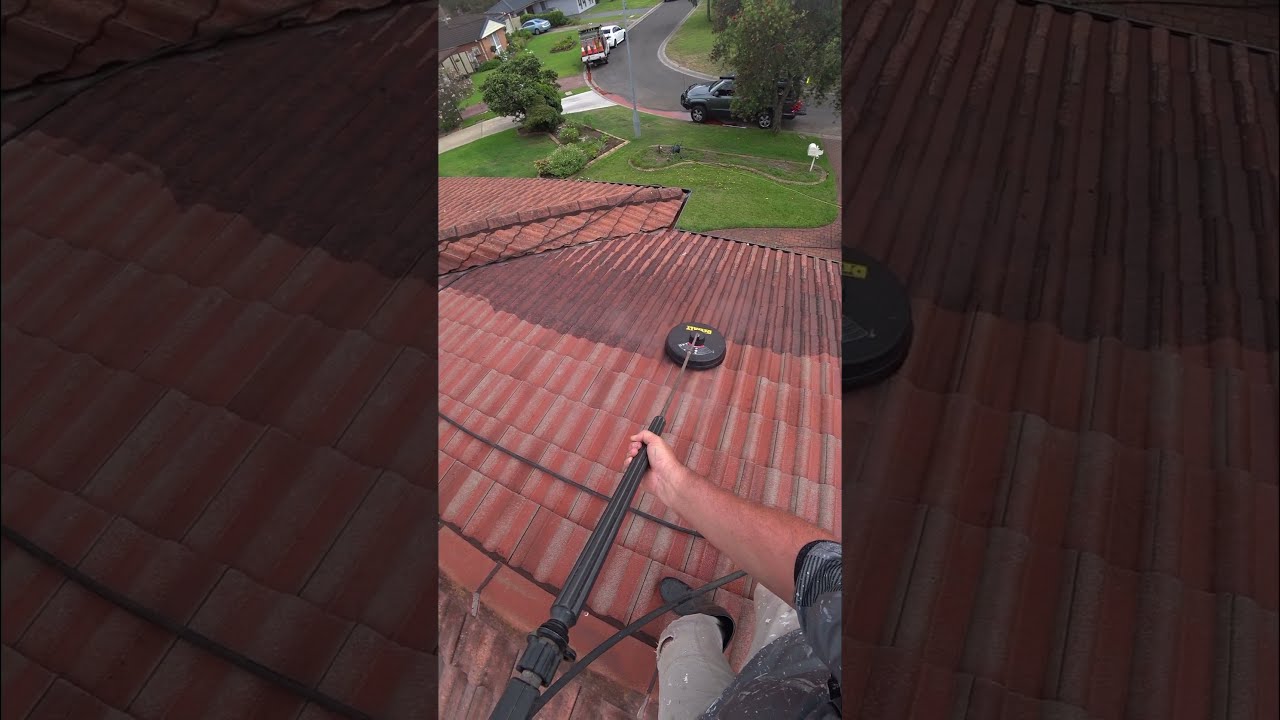
Boosting Curb Appeal and Property Value
The roof makes up a large share of what you see from the street. Staining and discolouration can make a well-kept home look neglected. If you are planning to sell or rent out your property in 2026 or 2027, a clean roof makes a strong first impression in listing photos and at inspections. Winter is also a popular time to prepare homes for the spring selling season, so washing now means you are ready when the market picks up.
What a Professional Roof Wash Involves
Methods vary between providers and roof types, but a thorough roof wash generally follows these steps:
- Inspection: The technician checks the roof type, condition, pitch, and any damaged or fragile areas that need care.
- Preparation: Windows, doors, and vents are checked, and plants, outdoor furniture, and pool equipment are protected or moved.
- Debris removal: Loose leaves and dirt are cleared from the roof surface, valleys, and gutters.
- Treatment application: A biodegradable or appropriate cleaning solution is applied to kill algae, moss, and mould at the root.
- Low-pressure or soft washing: Contaminants are rinsed away using controlled pressure suited to the roof material.
- Final rinse and clean-up: Gutters, downpipes, and surrounding areas are rinsed and tidied.
- Optional protective treatment: An anti-fungal or preventative treatment may be applied to slow regrowth.
Why Soft Washing Matters
High-pressure blasting is a common cause of roof damage. It can strip glazing, erode tile surfaces, force water under tiles, and damage older roofs. Soft washing, which uses low pressure and targeted cleaning solutions, lifts biological growth without harming the roof. For most residential roofs on the Sunshine Coast, soft washing is the safer and more effective approach.
Roof Types Common on the Sunshine Coast
Concrete Tile Roofs
These are very common across the region. They are durable but porous, so they hold moisture and show algae readily. Careful cleaning is important to avoid wearing away the surface layer.
Terracotta Tile Roofs
Terracotta handles cleaning well when done gently, though older tiles can be brittle and need careful footing. Lichen can be stubborn and may need treatment time to release.
Colorbond and Metal Roofs
Metal roofs generally clean easily, but salt, bird droppings, and organic debris in laps and valleys should be removed to protect the coating and prevent corrosion. Harsh chemicals and abrasive tools should be avoided to preserve the finish.
Safety, Regulations, and Environmental Considerations
Working at height is one of the riskiest activities in home maintenance. Queensland workplace health and safety rules apply to professionals working on roofs, so reputable providers use appropriate fall protection, equipment, and insurance. Homeowners should not attempt to climb onto a roof to clean it themselves, particularly when surfaces are slippery with algae.
Wastewater is another consideration. Runoff from a roof wash can carry cleaning solution, debris, and organic matter into stormwater drains, which flow to local waterways, creeks, and ultimately the ocean. A responsible provider will use environmentally considerate products, protect gardens, and manage runoff where practical, particularly in a region so closely tied to its beaches, estuaries, and Pumicestone Passage. It is reasonable to ask any contractor how they handle this.
How to Choose a Roof Washing Provider
Because roofs are delicate and the work is hazardous, it pays to ask a few questions before booking:

- Do you hold current public liability insurance and appropriate safety systems?
- What cleaning method will you use on my roof type, and why?
- Do you use high-pressure washing, and if so, how do you avoid damage?
- What products do you use, and are they safe for pets, plants, and waterways?
- Will you clean gutters and downpipes as part of the service?
- Do you offer a preventative treatment, and how long is it expected to last?
- Can you provide a written quote with the scope of work clearly outlined?
Preparing Your Home for a Roof Wash
A few simple steps help the job go smoothly:
- Move vehicles, outdoor furniture, and washing lines away from the work area.
- Close windows and doors, and secure pet doors.
- Trim back low branches that restrict access, if safe to do so.
- Let the provider know about any known leaks, cracked tiles, or areas of concern.
- Cover or relocate delicate potted plants near the house walls.
How Often Should You Wash Your Roof?
There is no universal schedule, but on the Sunshine Coast many homes benefit from a roof wash every two to three years. Properties with heavy tree cover, shaded roof sections, or very close proximity to the ocean may need more frequent attention. Homes in sunnier, more open positions may stretch the interval a little longer. If you can see dark streaks, green patches, or moss in the valleys, it is probably time.
Pairing a Roof Wash With Other Winter Maintenance
Winter is a natural time to tackle a full exterior maintenance check. Consider combining your roof wash with:
- Gutter cleaning and downpipe checks
- Inspection of ridge capping, pointing, and flashings
- Repairs to cracked or slipped tiles
- Exterior wall and driveway cleaning
- Trimming overhanging branches to reduce shade and debris
Doing these together can save time and often money, and it gives you a complete picture of your home's exterior condition heading into the warmer months.
Common Myths About Roof Washing
"Rain will wash it clean."
Rain rinses away loose dust but does nothing to kill algae, moss, or lichen. In fact, repeated moisture feeds their growth.
"High pressure is the best way to get a roof clean."
It may remove growth quickly, but it also risks stripping protective surfaces and forcing water beneath tiles. Soft washing is generally the preferred approach.
"Roof washing is only cosmetic."
While appearance improves, cleaning also supports roof longevity, drainage, and early detection of defects.
Final Thoughts
Winter offers the Sunshine Coast's most reliable combination of dry weather, mild temperatures, and low humidity, which is exactly what a roof wash needs to be safe, effective, and long-lasting. By cleaning and treating your roof now, you remove the damage-causing growth built up over the humid months, protect your roof ahead of the next wet season, and improve the look and value of your home. Choose https://beckettvjwx931.swiftnestly.com/posts/how-often-should-you-wash-your-sunshine-coast-roof a provider who uses gentle methods suited to your roof type, prioritises safety and the local environment, and gives you a clear written quote. A little attention this winter can help your roof perform well through 2026, 2027, and beyond.
Sunshine Coast Roof Cleaning Pros
Unit 2/47 Enterprise St, Kunda Park QLD 4556, Australia
(07) 4158 6008
Ends · STEPHENPNDY096